
Potter County Parole and Probation
Parole is conditional release from a TDCJ sentence before the maximum sentence date. The Texas Board of Pardons and Paroles decides whether to grant parole or discretionary mandatory supervision, while the TDCJ Parole Division supervises the person after release. Probation, called community supervision in Texas law and court records, is imposed by a trial court. Potter County Community Supervision and Corrections Department administers local felony and misdemeanor supervision.
The distinction controls where to verify the record. A TDCJ number, SID number, parole release certificate, or Parole Division status points to the state path. A Potter County cause number, judgment, order placing a person on community supervision, or revocation docket points to probation. A person may also finish a jail term with no supervision at all.
| Status | Decision maker | Best record |
|---|---|---|
| Parole | Texas Board of Pardons and Paroles | TDCJ release and Parole Division status |
| Mandatory supervision | Board review where required | TDCJ release certificate and status |
| Probation | Potter County sentencing court | Judgment, docket, and CSCD confirmation |
| Discharge | Supervising authority or court | Dated discharge or termination record |
- Parole
- Supervised release while a state-prison sentence remains active.
- Probation
- Court-ordered community supervision, often instead of confinement.
- Absconder
- A person alleged to have stopped reporting or left supervision without permission.
- Discharge
- The formal end of a sentence or supervision term.
Verify Potter County Post-Release Supervision
Start with the custodian that released the person. The PCSO active roster and daily book-in PDF concern county custody. They do not show a complete parole or probation history. For a state-prison release, use TDCJ information and then confirm active supervision through the Parole Division. For probation, search the Potter County court case and contact the local department only for information it may lawfully disclose.
- Identify the release source: Potter County Detention Center, a TDCJ unit, or another sovereign.
- Match the person with a TDCJ or SID number for a prison case, or a cause number for a court case.
- Read the dated judgment, release certificate, or disposition. Do not treat eligibility or a projected date as release.
- Confirm the supervising office and current status with the responsible agency.
- Request the dated discharge record if the question is whether supervision ended.
The Potter County court portal can show judgments, revocation filings, warrants, and later dispositions. Filed court events explain the legal status, but an online docket can lag and may omit protected information. A clerk-certified record is stronger when the precise order matters.
Potter County Parole Office Routes
TDCJ lists two Amarillo District Parole Office routes in the research. Amarillo DPO I is at 5809 South Western Street, Suite 130, Amarillo, TX 79110, with phone (806) 355-9218. Amarillo DPO II is at 5809 South Western Street, Suite 120, with phone (806) 359-7783. The listed region is Region V. An office should be contacted only after the person and state record are matched, since release at Clements does not by itself assign that person to an Amarillo caseload.
TDCJ Amarillo District Parole Offices
DPO I: Suite 130, (806) 355-9218
DPO II: Suite 120, (806) 359-7783
5809 South Western Street, Amarillo, TX 79110
The TDCJ Parole Division office directory is the source to check for a current assignment and contact. Office geography does not prove that a named person is supervised there.
Potter County Probation Records
Probation begins with the sentencing court, not the jail roster. Search by name, then reconcile the result with cause number, court, filing date, and charge. The useful papers include the judgment, conditions of community supervision, modification orders, motions to revoke, capias or warrant entries, and an order terminating supervision. A jail admission after an alleged violation does not itself prove revocation.
Potter County CSCD is the local supervision department identified in the research. A requester should use a court record for the legal terms of probation and ask the department only for a status it is authorized to release. Some supervision details can be restricted. If the portal shows a motion but no ruling, obtain the later order from the relevant clerk rather than assuming the outcome.
Potter County Violations and Warrants
Parole-violation and release-hold language can appear on the Potter County active roster. Such wording explains present confinement or a planned handoff. It is not proof that parole was revoked, that a warrant remains active, or that the person returned to the community. Confirm a state parole warrant with TDCJ and the Board process; confirm a probation warrant through the Potter County case.
An absconder is someone alleged to have left supervision or stopped reporting. The label does not resolve whether a warrant was later withdrawn, served, or adjudicated. For personal safety or notification needs, use official agency channels rather than approaching the person.
Texas IVSS Supervision Notifications
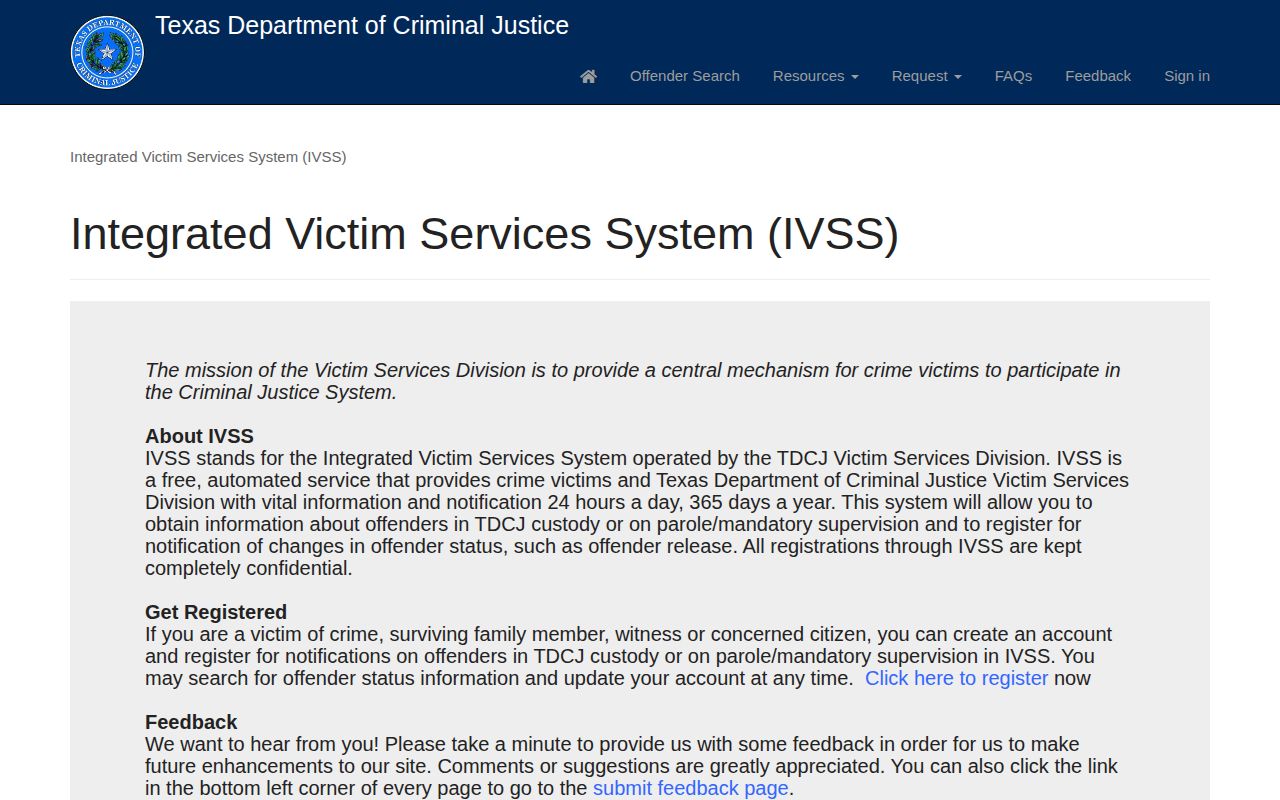
Texas replaced the older county VINELink route with Texas IVSS Counties effective September 1, 2025. TDCJ also operates a separate statewide IVSS environment for prison and parole events. That split matters in Potter County: a county-jail custody event belongs in the county service, while a TDCJ release or parole event belongs in the state system.
The official TDCJ IVSS portal supports event information and notification registration. A notice can document that the system sent a listed event, but it is not a court judgment or full discharge certificate.
Property After Potter County Release
PCSO says a person held at the detention center may release personal property to a designee by submitting the jail's property-release form. This inmate-directed process can occur while the person is still confined. It should not be read as evidence that physical release has taken place.
At actual release, the property receipt or account closure may help identify the booking episode. If that detail matters, include it in a focused PCSO records request along with the booking number, release date and time, release authority, and destination if transferred. Property procedures at a TDCJ unit follow state rules, not the PCSO jail process.
Potter Parole Decisions and Review
Texas does not publish an ordinary calendar of individual parole votes like a court hearing docket. Panels review files and use outcome terms such as approval, denial, and set-off. Eligibility starts a review path; it does not promise release. Board minutes describe the process, while a person's TDCJ and parole records supply the case result.
A scheduled release date is stronger than an eligibility date, but scheduling can change near the expected day. Holds, release planning, audits, programs, new process, and record corrections may intervene. Confirm the executed release and supervision status after the event.
Potter County Supervision Discharge
Texas Government Code Chapter 508 supplies much of the parole and mandatory-supervision framework. A focused TDCJ request should identify the person by full name, TDCJ number, and SID, then ask for release date, release type, release unit, and discharge or supervision status. Broad institutional files may contain confidential material and require added redaction.
A discharge ends the relevant supervision term, but the confirming record depends on the path. TDCJ or the Parole Division holds a state parole discharge record. The Potter County sentencing court holds an order ending probation. A maximum sentence date, an old projected release date, or a missing public search result is not a substitute.
For a full custody and release timeline, pair the supervision record with the physical release entry. The Potter County released-inmate search and records coverage on the home page explains how to request the jail event and reconcile it with the court.
A Potter County probation discharge should be tied to the cause number and ending order. A state parole discharge should be tied to the TDCJ identifiers and dated agency record. If an online result disappears, request the record from the originating authority. Absence from a public page does not establish successful completion.
Supervision can also end through a new legal event rather than routine completion. A court may revoke probation, or the parole process may return a person to custody after a warrant and hearing. A roster entry can reveal detention, but it cannot replace the later decision. Match the booking to the motion, warrant, hearing result, or final order. If another office handled the matter, obtain its record as well. This keeps the custody event, alleged violation, and final outcome separate.
Conditions vary by order and case. Do not infer a restriction from a generic program description. The signed court conditions or parole certificate controls. For a current instruction, the supervised person should use the assigned officer and official reporting channel.
A county IVSS notice and a TDCJ IVSS notice have different scopes. Keep the registration confirmation and event date, then compare the notice with the jail, prison, court, or parole record. The originating authority supplies lasting proof of release, transfer, revocation, or discharge.
Record the date of every status check. Supervision assignments and warrant conditions can change, so an undated note cannot settle a later question.