
Understanding Potter County Releases
Leaving the Potter County Detention Center can mean release on bond, completion of county time, dismissal, or another court-authorized return to the community. It can also mean a transfer to TDCJ, another county, the U.S. Marshals Service, the Bureau of Prisons, or ICE. Both events remove a person from PCSO's physical custody. Only the first group necessarily means the person is free in the community.
PCSO operates the county's principal adult jail. Its public interface is report-based, not a person-level history database. The daily active roster describes people still listed, while the daily Arrest Summary Report describes new bookings. Neither document is a release archive. A dated jail-management entry is needed to state when and why custody ended.
| Departure | Meaning | Next source |
|---|---|---|
| Bond or court order | Physical release after processing | PCSO release entry and court case |
| Time served | County term completed | Jail record and judgment |
| TDCJ transfer | State custody continues | TDCJ inmate information |
| Federal or ICE transfer | Another sovereign holds the person | BOP, ICE, docket, or USMS route |
Potter County Release Record Fields
The release record should be tied to one booking episode. Useful identifiers include full name and aliases, date of birth when known, SO number, booking number, and admission date. The event itself should supply physical release date and time, release authority and type, and the receiving agency or destination if the departure was a transfer. Charge-level disposition can explain which matters were resolved and which holds remained.
Ask for the commitment or release order when legal authority matters. A bond type and posting timestamp can connect a bond release to the case. A property-account closure or receipt may help establish final processing, while the episode-specific booking photograph prevents an old image from being matched to a newer case. One row on a live roster rarely contains this full history.
| Field | Question answered |
|---|---|
| Booking and SO numbers | Which admission belongs to the person? |
| Physical release time | When did PCSO custody end? |
| Release authority and type | Why did the person leave? |
| Receiving agency | Was custody transferred? |
| Charge disposition | What was recorded on each matter? |
| Release order | Which legal document authorized action? |
Request Potter County Release Records
PCSO Records is the custodian for the county jail booking and release event. Its office is at 13103 NE 29th Avenue, Amarillo, TX 79111; the listed phone is (806) 379-2932. Posted hours are Monday through Friday, 8:00 a.m. to 4:00 p.m. PCSO says an in-person requester fills out a form and presents picture ID. Research found no posted fixed fee for a release record or booking photo.
- Identify the person and exact booking episode with the booking or SO number if available.
- Ask for booking date, physical release date and time, release type, authority, and destination.
- Request the charge disposition and release order tied to that admission.
- State an exact time range when seeking an existing release log.
- Respond to clarification or a lawful cost estimate promptly.
A written request reaches existing recorded information. It does not require the agency to answer a new question or create an analysis. The often-cited ten-business-day Texas deadline chiefly concerns an agency seeking an Attorney General ruling to withhold information; it is not a promise that all records arrive within ten days.
Texas Law on Potter Release Records
Texas Government Code Chapter 552 is the Public Information Act. Section 552.021 states the basic right to inspect or copy public information, subject to exceptions. Section 552.108 is a law-enforcement exception, not a blanket rule making all arrest material either open or closed. Other law can protect juvenile, victim, medical, security, and confidential identifying information.
Send the request to the proper custodian. Potter County states that arrest records generally belong with the arresting agency and court filings with the relevant clerk. The Commissioners Court open-record route is not automatically the Sheriff's records channel. State cost rules may permit charges for copies, labor, programming, or overhead in qualifying work. Ask for an estimate rather than assuming every record is free.
Expunction under current Texas Code of Criminal Procedure Chapter 55A or another sealing order can restrict or remove accessible material. A vanished record may reflect valid legal action, not a search error. Retention schedules govern underlying records separately from the short life of a regenerating public roster.
Find Released Potter County Inmates
First decide whether the person was a county detainee, a state prisoner, a federal prisoner, or an immigration detainee. Then use identifiers rather than name alone. Amarillo spans Potter and Randall Counties, so an Amarillo Police Department arrest does not by itself establish which jail booked the person.
- Check the dated PCSO active roster only for current county custody.
- Use the daily book-in report to capture the right booking episode, not to infer release.
- Request the PCSO release or transfer entry when the name is gone.
- Search the Potter County court portal for the order or disposition behind the change.
- Follow TDCJ, federal, or ICE channels if the record names another custodian.
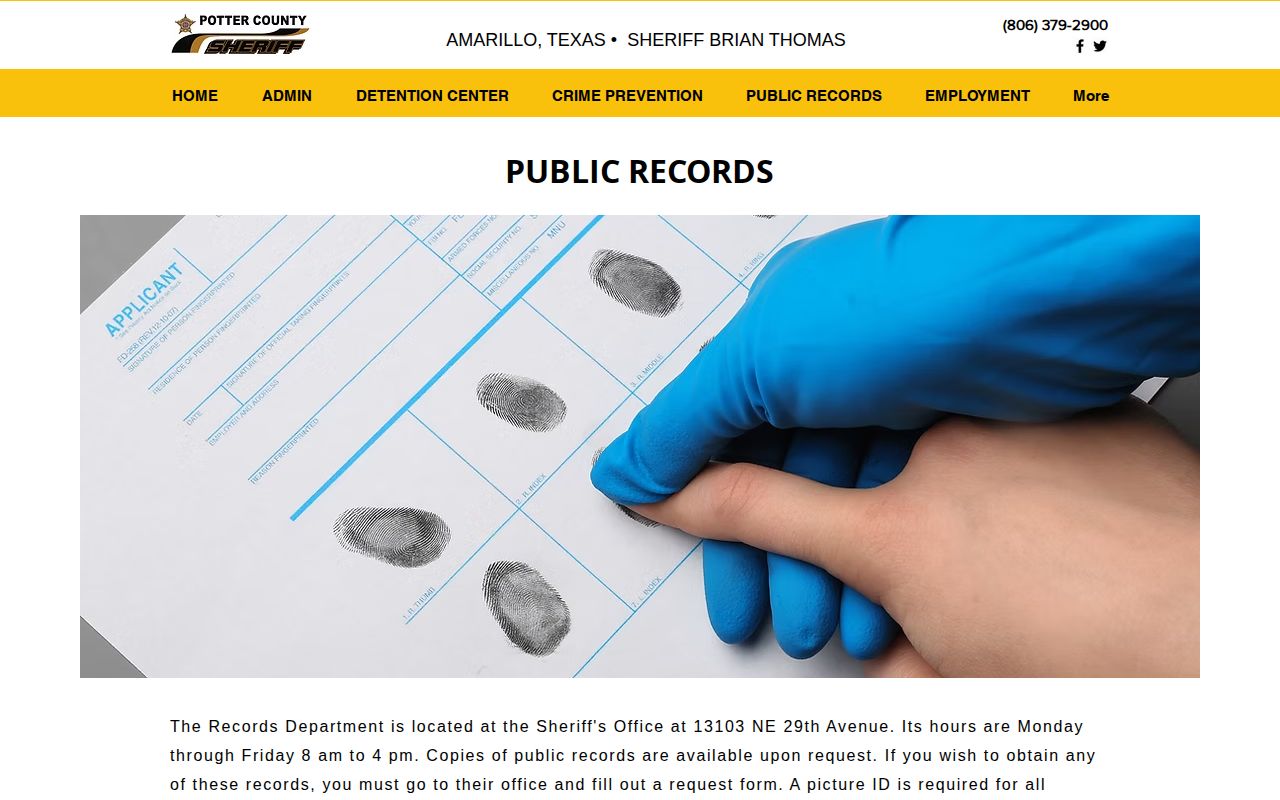
The PCSO Public Records page brings together the roster, book-ins, county IVSS, warrants, registry, and Records office route. Its screenshot shows the available doors, but it does not turn those sources into a combined release database.
Why Potter Released Inmates Disappear
The active roster is regenerated as a current report. A name can disappear because the person returned to the community, transferred to TDCJ or another jail, entered federal or immigration custody, or was affected by a correction and report refresh. Comparing two PDFs may narrow a time window, but subtraction does not prove the event.
Status text can point the search in the right direction. “Sentenced TDCJ” suggests state transfer rather than community release. A parole violation, agency release hold, or immigration/customs entry can signal continued custody under a different authority. Read each status as a lead about why a currently listed person remains held.
TDCJ Search for Potter Releases
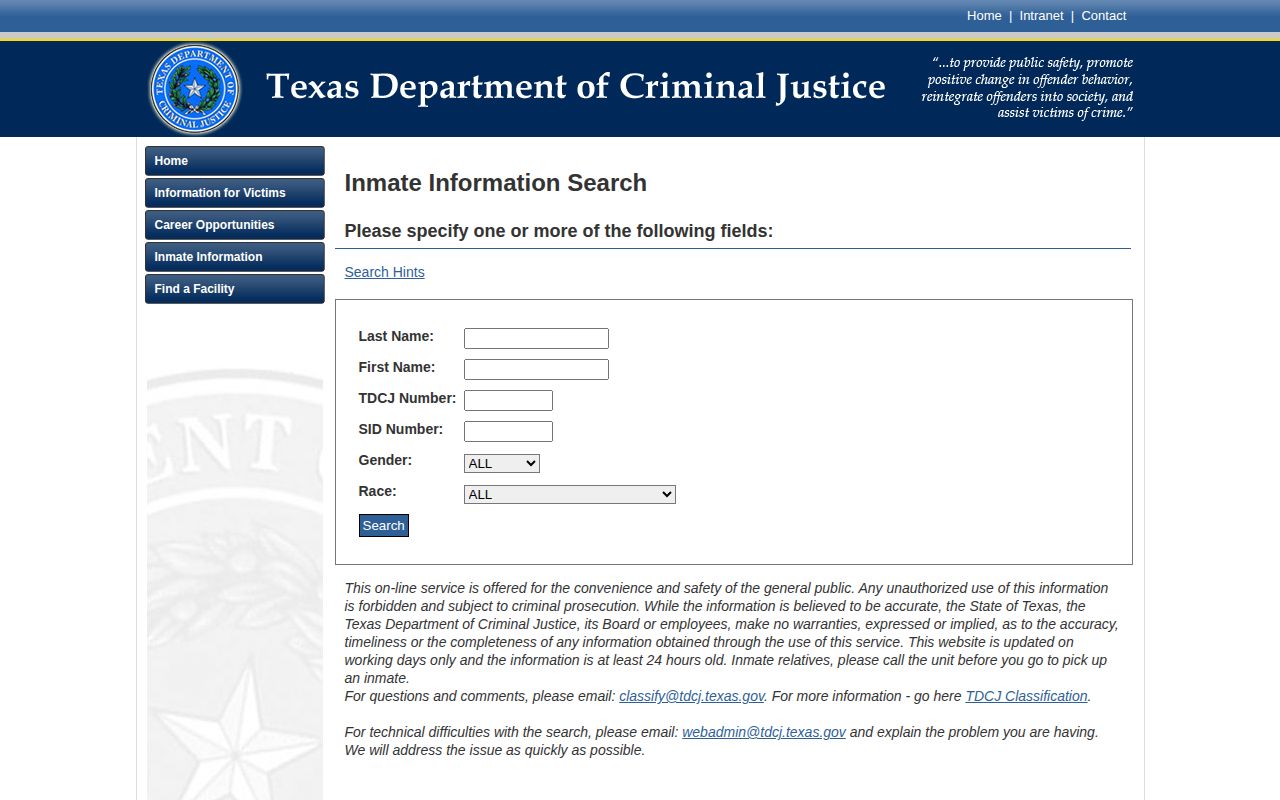
The TDCJ Inmate Information Search is the state-prison channel. Search fields include name and identifiers such as TDCJ or SID number. A detail may show current facility or status, projected release date, parole eligibility date, maximum sentence date, and offense information. Availability changes with status.
The public search is described as covering people currently incarcerated in a TDCJ facility. A former prisoner may no longer appear, so use TDCJ information or a focused Public Information Act request for the actual release date, release type, release unit, and supervision or discharge status. Projected release is a planning calculation. Parole eligibility is merely the point at which review may occur. Neither proves a completed departure.
Potter Court Release Cross-Check
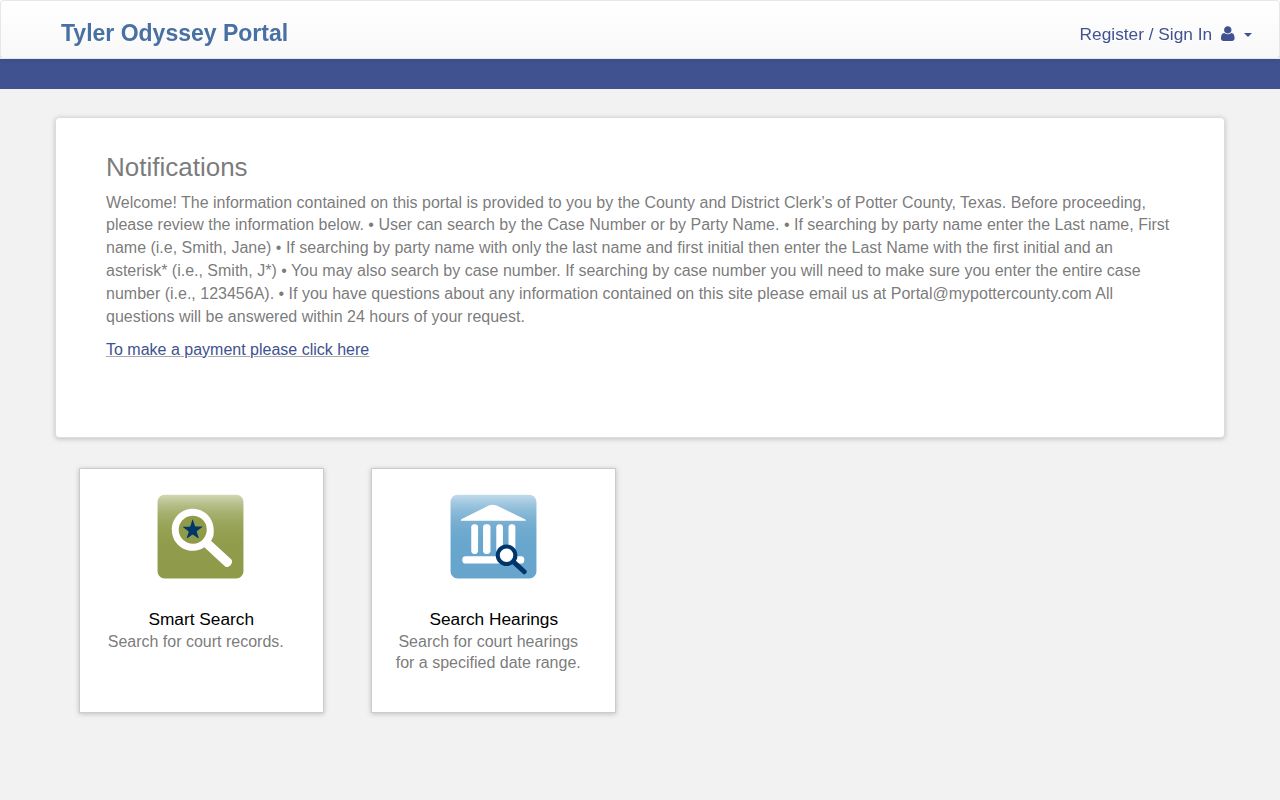
The Potter County Tyler portal covers county and district matters. Search by name, then match cause number, court, filing date, and date of birth where publicly shown. Useful documents include bond orders, docket entries, pleas, judgments, sentences, jail-credit findings, dismissals, revocation matters, warrants, mandates, and later expunction or nondisclosure orders.
A disposition explains the legal outcome. It does not always record the minute the detention center completed release processing. Pair the court order with the PCSO event when exact physical time matters. Amarillo Municipal Court maintains its own city-case records, while more serious cases route to county or district court.
Potter Parole and IVSS Status
Parole is supervised release from a TDCJ sentence. The Texas Board of Pardons and Paroles makes release decisions, while the TDCJ Parole Division administers supervision. Probation is court-ordered community supervision and follows the Potter County court and CSCD path. A jail departure does not prove either status.
Texas IVSS Counties became the current county notification route on September 1, 2025, replacing older Texas VINELink directions. TDCJ operates a separate IVSS environment for state corrections events. An event alert is useful notification evidence, but it is not the full release certificate or court record. Detailed verification is covered on the Potter County post-release supervision page.
Federal Potter County Release Checks
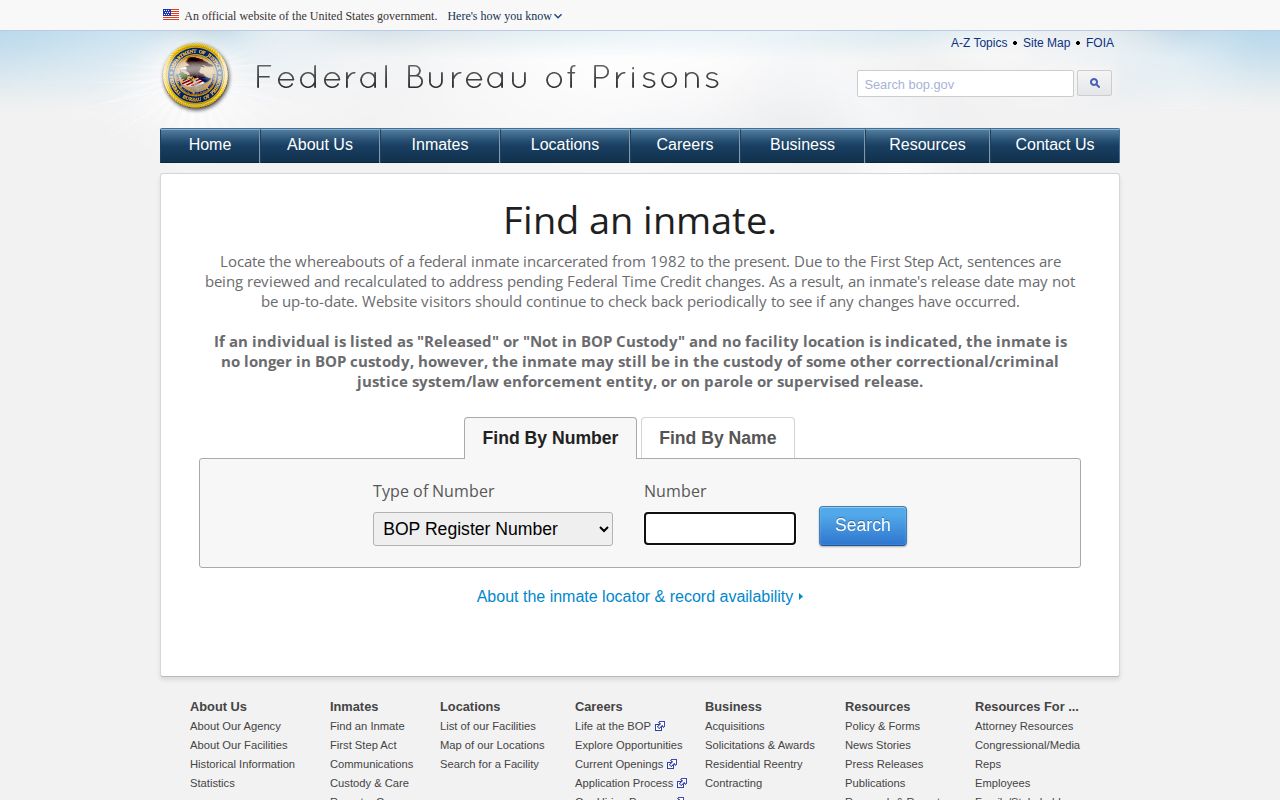
A federal case can bypass Potter County criminal court or use the county jail only as temporary housing. The BOP Inmate Locator retains records for people incarcerated from 1982 onward and may show a release date with “Released” or “Not in BOP custody.” It does not document release from PCSO.
ICE's Online Detainee Locator uses an A-number and country of birth or biographical details. A Potter roster immigration hold may culminate in transfer to ICE rather than community release. USMS has no public historical person locator comparable to BOP; use the federal docket, holding facility, counsel, or appropriate district office. Each source answers a different custody question.
Getting Home After Potter Release
The Potter County Detention Center sits at 13100 NE 29th Avenue outside central Amarillo. Research found no PCSO promise of a public transit stop, taxi voucher, ride program, fixed pickup point, or set release window. Confirm actual release before traveling, especially when transportation depends on an estimated time.
Corrections staff work three eight-hour shifts and the detention center operates continuously. Releases and transfers can occur outside the weekday hours of the public Records office. Bond verification, court documents, sentence calculation, holds, identity checks, transfer acceptance, and property processing can change timing. Continuous operation is not a guarantee of release at any chosen hour.
Property and Potter Release Proof
PCSO says a confined person may release personal property to a designee by completing the jail's property-release form. This is an inmate-directed procedure and can occur before custody ends. It should never be treated as proof of discharge.
A final property receipt or account closure may still help identify the episode when included in a focused records request. Ask for it only when relevant, alongside release date and time, authority, type, and destination. TDCJ property at the William P. Clements Unit follows state rules rather than the county jail process.
Clements Is a Potter Release Site
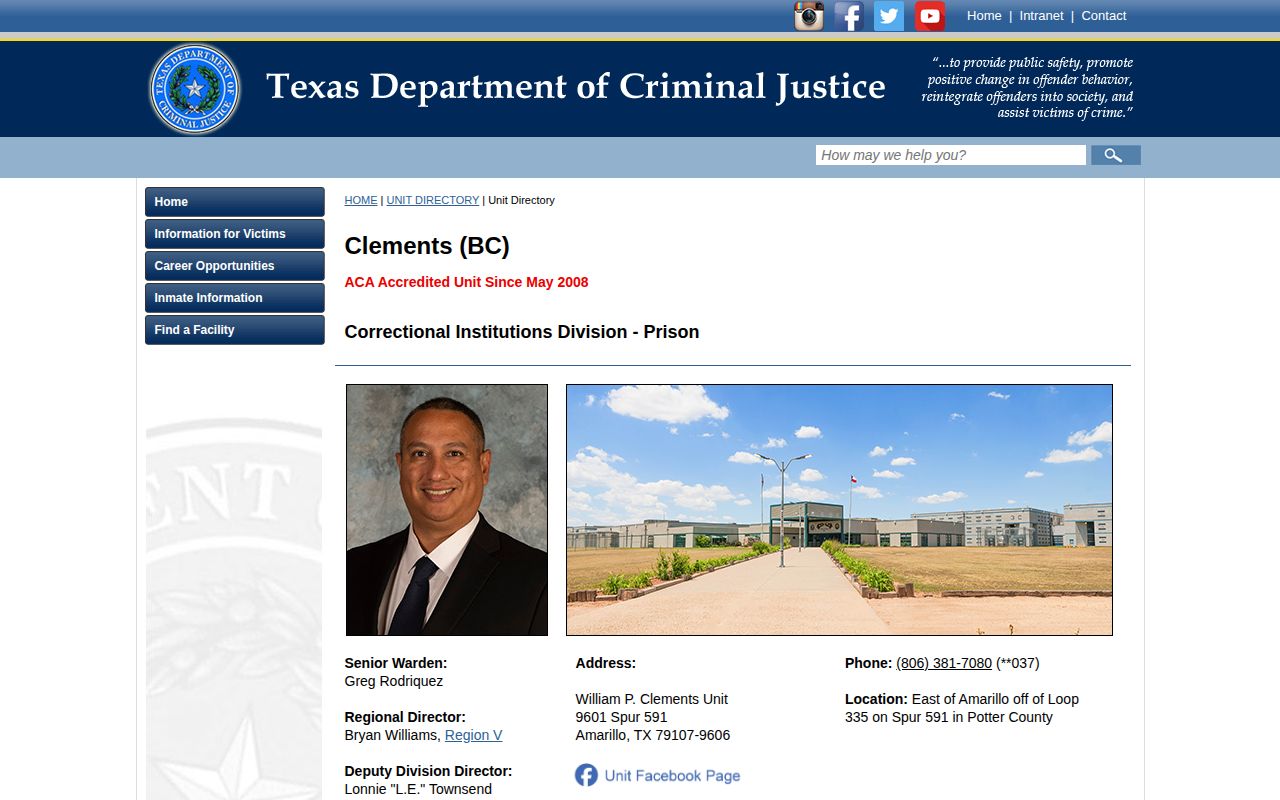
TDCJ identifies the William P. Clements Unit east of Amarillo as a regional release site. That creates a second local meaning for “released in Potter County.” Someone can physically leave a state prison in the county after serving a sentence from anywhere in Texas. The governing record remains TDCJ's release record, not PCSO's.
A Clements departure can also be an internal transfer, hospital movement, bench-warrant movement, parole or mandatory-supervision release, or full discharge. Verify the category, date, and continued supervision through TDCJ and the Parole Division when applicable. The unit's role is a logistical fact, not proof about any named person.
Potter Registry Is Not Release
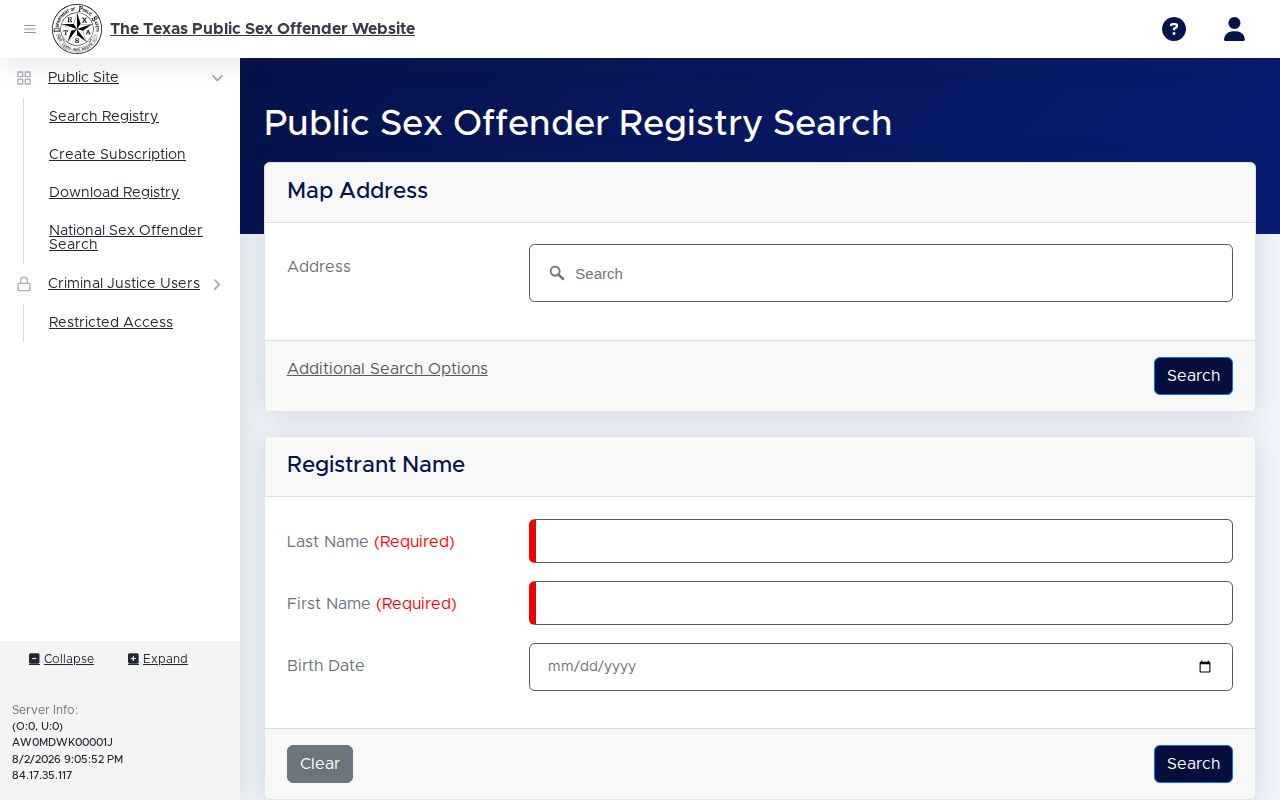
The Texas DPS Sex Offender Registry can continue to show a person after release when registration law applies. It is a specialized statutory registry, not a general list of Potter County released inmates. A result does not establish the date a jail or prison released the person.
Texas Code of Criminal Procedure Chapter 62 controls registration data. People with no registration duty will not appear, so an empty result says nothing about custody. Use the originating jail or TDCJ record for release proof.
The official DPS registry search shows this separate purpose.
Potter County Facility Paths
Older maps may name the former Neal Unit next to Clements. The current TDCJ directory does not present Neal as an operating unit entry, so it should not be used as a current search destination. Live agency directories control when facility history and an old source conflict.
Facility labels alone are insufficient. An Amarillo Police arrest may lead to Potter or Randall County custody, and a federal detainee may be held under contract. Find the actual booking or holding agency before requesting a release event.
Each Facility Map entry represents a distinct records route. The detention center supplies county booking and release records. Clements and the statewide TDCJ system supply prison status and discharge records. Amarillo Police supplies arrest reports, while the receiving jail supplies custody events. Potter and Amarillo courts preserve enduring case records.
| Facility or system | Release route |
|---|---|
| Potter County Detention Center | PCSO release or transfer entry |
| William P. Clements Unit (BC) | TDCJ status, release, and supervision record |
| Amarillo Police temporary custody | APD arrest report plus actual receiving jail |
| Potter County and Amarillo courts | Orders, judgments, and dispositions |
| TDCJ statewide prison system | State inmate information and records |
| Federal Bureau of Prisons | BOP locator and federal record |
| ICE / ERO custody network | ICE locator and field-office route |
| U.S. Marshals Service custody | Federal docket, facility, counsel, or USMS office |
The Potter County Detention Center has a reported capacity of 599 beds and typically holds about 500 to 520 people, but those figures describe operations rather than a release count. A high daily population does not supply a recent-release total. Use event records for an exact window.
The Clements Unit has a listed capacity of 3,182 and several custody levels. Those details explain why many kinds of movement can occur there, including internal transfers and hospital or bench-warrant trips. The TDCJ status and dated release record distinguish those movements from parole, mandatory supervision, or full discharge.
Potter County courts and Amarillo Municipal Court are not detention facilities, yet their records often outlast a roster entry. Pair the correct order with the jail or corrections event. That combined timeline is more reliable than a name-only search in any one system.
Records from different custodians should not be merged without matching dates and identifiers. The same name can appear in a police report, county booking, state transfer, and later federal matter. Build the sequence from cause number, booking number, SO number, TDCJ or SID number, and federal or immigration identifiers as each system requires. When dates conflict, ask the office that created the disputed entry for the source record and any correction. A later court filing can explain an outcome, while only the custody agency can confirm the physical handoff it performed.
Save the source title, agency, and access date with each result. That small record makes later changes easier to explain and keeps a custody lead from being mistaken for final proof.